The confused peacemaker
There are moments in peacemaking that feel far less heroic than we might expect. Times when we can see something breaking, sense that it matters deeply, and yet feel powerless to know what to do next. We care. We’re praying. We want to act wisely. But the path forward feels foggy.
This is the place of the confused peacemaker.
Confusion in peacemaking is not a failure of faith. Often, it’s a sign that the situation is complex, layered, and deeply human. Scripture never pretends that reconciliation is simple. Again and again, God’s people are shown wrestling with uncertainty, waiting for clarity, and learning to trust him when immediate answers do not come.
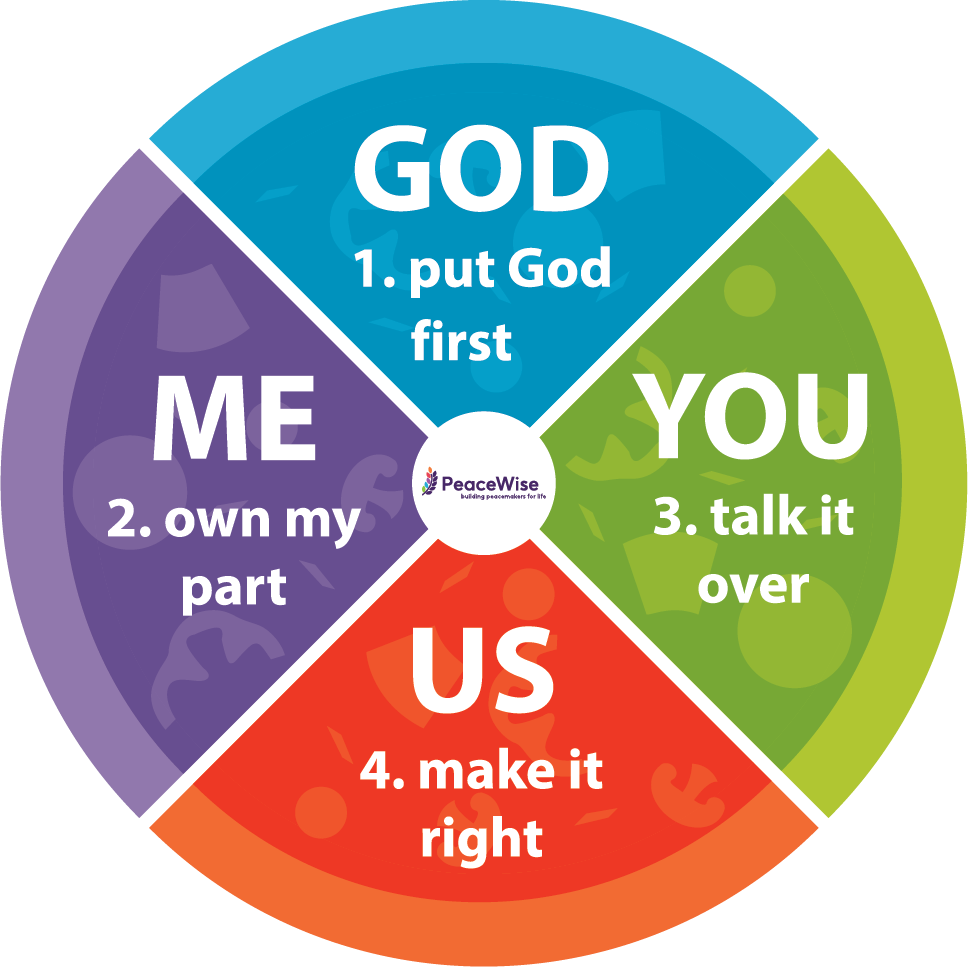
Many of us are familiar with the GOD–ME–YOU–US framework as a helpful way to think through conflict and peacemaking. It offers wise structure for reflection and action.
Yet even when we faithfully work through each part, there are situations where the next step still isn’t obvious.
So what do you do when wisdom does not feel clear, and obedience does not feel straightforward?
Begin by returning to God
Confusion is an invitation to slow down, rather than rush ahead in fear or anxiety. James reminds us,
“If any of you lacks wisdom, you should ask God, who gives generously without finding fault.”
James 1:5
Wisdom is not just about choosing the right action. It is about learning to depend on God when the right action isn’t yet clear.
Prayer in these moments is less about asking God to fix the situation and more about asking him to shape your heart and guide your steps.
Ask for patience to wait, humility to listen, courage to act when needed, and peace in uncertainty. Ask the Lord to guard you from acting out of fear, frustration, or a desire to control outcomes that are not yours to control.
Sometimes the most faithful thing you can do is to keep placing the situation back into God’s hands, again and again.
Take responsibility for what is truly yours
Confusion often tempts us to swing between two extremes: withdrawing completely or diving in strongly just because we want to be doing something. The “ME” part of peacemaking helps ground us. What is my responsibility here? And what is not?
You may not be responsible for every part of the conflict, but you are responsible for your approach to it. Your words. Your prayers. Your responses. Your willingness to remain loving even when outcomes are uncertain.
“Each one should test their own actions”.
Galatians 6:4
There is peace in doing what is yours to do, and releasing what is not.
Seek wise and prayerful counsel
God rarely intends us to navigate complex peacemaking alone. When the way forward feels unclear, inviting trusted and spiritually mature people into your discernment is not weakness. It is wisdom.
“The way of fools seems right to them, but the wise listen to advice”.
Proverbs 12:15
Seek out trusted people who love God, listen well, and are willing to ask you gentle but honest questions. Invite them to pray with you, help you notice blind spots, and reflect together on what faithfulness might look like in this season. Sometimes clarity does not come as a clear instruction, but as a deeper sense of peace about what you should not do yet.
Wise counsel can help you slow down, stay humble, and remain anchored in God’s truth, especially when emotions are high and the tension feels unresolved.
Do one small, faithful thing
When the whole situation feels overwhelming, ask God what one small peacemaking step you can take right now. You may not be able to resolve the entire conflict, but you may be invited to play a faithful part in a bigger picture.
That small step might look like listening a little longer when someone is airing their discontent, rather than rushing to respond. It might mean choosing to stay present when things feel uncomfortable, rather than disengaging. It could involve gently naming what feels unspoken, not to accuse or control, but to bring truth into the light with grace; or offering an apology for one small part of a bigger issue.
These actions may not resolve the conflict but they are peacemaking, and they often open space for God to work in others too.
Accept the limits of your influence
One of the hardest truths for peacemakers to accept is this: you cannot restore every broken relationship. You cannot make the other repent, show humility, or even want to be reconcilded with you. Even Jesus allowed people to walk away.
There are times when being a peacemaker means entrusting the situation to others with authority. There are times when it means waiting. There are times when it means grieving what you cannot fix.
This is not resignation. It is faithful surrender.
Trust God with the unresolved
Living with uncertainty is deeply uncomfortable, especially for those who long for peace. Yet Scripture reminds us that God is always at work, even when we cannot see how. The Spirit moves in ways we cannot control or predict.
“And we know that in all things God works for the good of those who love him, who have been called according to his purpose.
Romans 8:28
Being a confused peacemaker does not disqualify you from God’s work. Often it places you right in the centre of it.
Faithfulness is not measured by how neatly a situation resolves, but by how you walk through it – with humble, prayerful obedience, continuing to be a peacemaker as the situation allows. As Paul encourages us, in a verse filled with both exhortation and realism:
“If it is possible, as much as it depends on you, live at peace with everyone.”
Romans 12:18
Sometimes peacemaking looks like action.
Sometimes it looks like restraint.
Sometimes it looks like waiting with God in the tension.
And sometimes, that is enough.
If you’re facing a situation that feels confusing or heavy, you don’t have to navigate it on your own. The PeaceWise app offers real-time, self-directed support through Coach, a simple coaching tool to help you think through everyday conflict right when you need it. And if things feel particularly stuck, you’re always welcome to reach out to learn more about our free prayer and coaching support, so you can take the next step with others walking alongside you.

This devotion was written by Wayne Forward. Wayne is the CEO of PeaceWise. He loves Jesus’ promise, “Blessed are the peacemakers, for they will be called children of God.” He is committed to helping as many people as possible of every age know and experience this promise for themselves.